
Your Cart is Empty
Get 10% off all orders over £50. Discount applied automatically at checkout.
Get 10% off all orders over £50. Discount applied automatically at checkout.
Looking for the best hydration bladder UK riders, runners and hikers can actually buy in 2026? You've got more options than you might realise, and the gap between the cheapest and the priciest is bigger than you'd think for what is, ultimately, a plastic bag with a tube.
This is an honest roundup of five 2 litre hydration bladders on sale in the UK right now. We make one of them, the BTR 2L. We're putting it next to CamelBak, Osprey, Source and Platypus, and being upfront about where the bigger brands beat us on features and where we win on price.
If you're still deciding whether you want a bladder at all, our hydration bladder vs water bottle comparison covers that question first. Already sold on the format? Read on.
Before the picks, the criteria. Most reviews bury this. We think it should come first, because once you know what matters the choice gets easier.
British Cycling guidance puts hydration needs at 500 to 1,000ml per hour depending on conditions and effort level. So a 2L bladder covers a 2 to 3 hour ride comfortably, and longer at lower intensity. (British Cycling nutrition guidance.)
We make this one, so take this section with the obvious pinch of salt. We've also put it first because the price is the point, not buried at the bottom of the roundup.
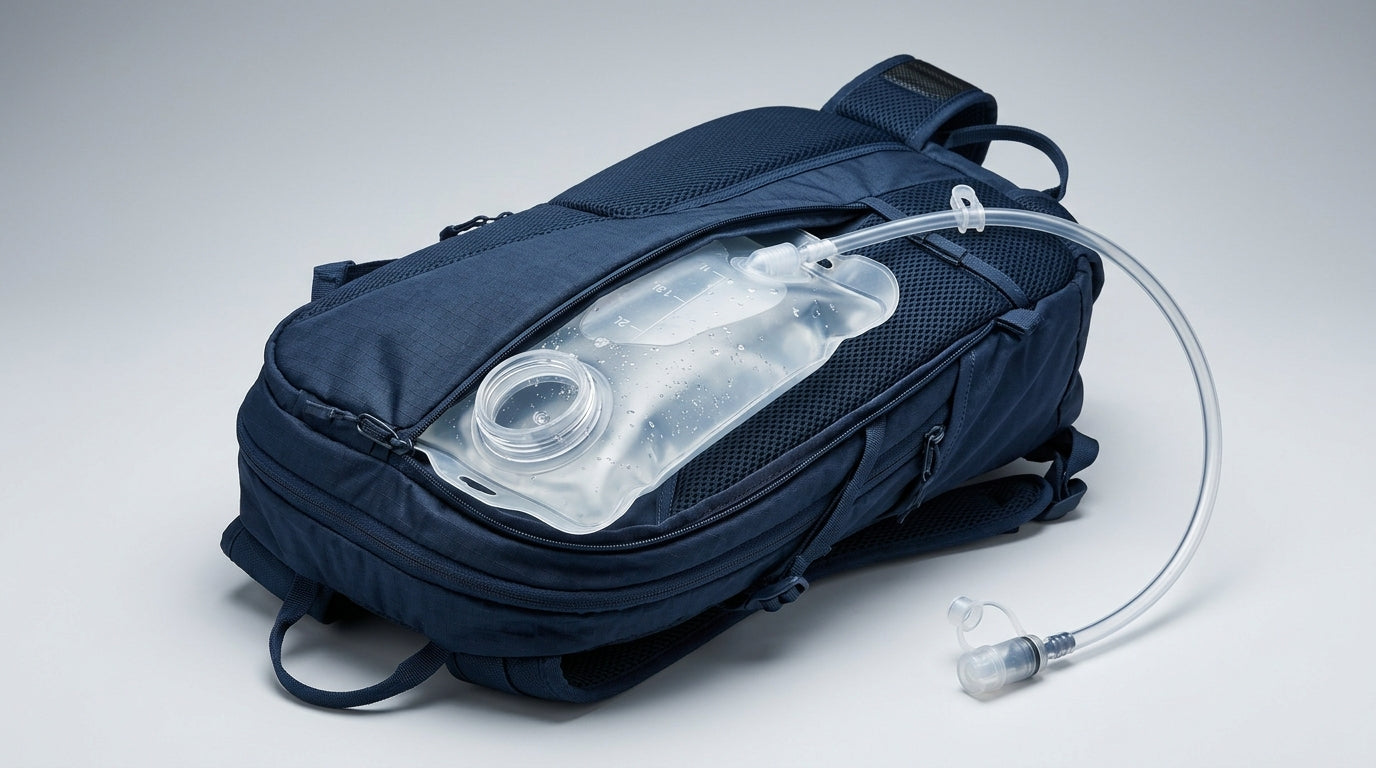
The BTR 2L Hydration Bladder is BPA-free TPU, 2 litre capacity, with a bite valve and a tube long enough to route through a standard cycling or running backpack. There's nothing flashy about it. It's basic kit done well at a UK price that sits comfortably under half what the brand alternatives cost.
It's the right pick if you're new to bladders and don't want to spend £35 to £45 on a CamelBak before you've worked out whether you actually like riding with one. It's also the sensible second bladder, the one you grab when your main one is still drying from yesterday's wash.
Pros: cheapest in this roundup by a long way, BPA-free, fits any backpack with a hydration sleeve, decent bite valve.
Cons: screw cap rather than a wide-mouth opening, so cleaning takes a little more effort than the Source or Platypus. Our step by step guide to cleaning a hydration bladder works for any narrow-opening design.
Best for: first time bladder buyers, commuters and anyone who values keeping £20 in their pocket more than a brand badge.
If we had to recommend a single competitor bladder on features alone, the Source Widepac would probably be it. Source's Widepac opening is the widest mouth on the market: a fold-and-clip bar that opens the entire top of the bladder. Cleaning is genuinely easy with no awkward angles to brush around.
Source also coat the inside with a Glass-Like film designed to stop biofilm building up. In practice, users on Reddit and outdoor forums report mould-free bladders even after months of storage, which is something the silver-ion designs (Platypus) struggle to match.
UK pricing sits around £21 to £30, which is genuinely competitive against CamelBak and Osprey while offering a better cleaning experience.
Pros: widest mouth in the category, anti-microbial coating that actually works, taste-free.
Cons: not widely stocked in UK high street shops. You're mostly looking at specialist outdoor retailers or online.
Best for: hikers, bikepackers and anyone who uses their bladder hard and needs cleaning to be painless.
CamelBak invented the hydration bladder market in the 1980s and the Crux is their current 2 litre flagship. The headline feature is the Crux delivery system: 20% more water per sip than CamelBak's previous design, plus a quick-disconnect at the bladder so you can pull the tube off and refill without unthreading the whole thing.
Build quality is consistently good and CamelBak run a lifetime warranty in the UK on the bladder itself. That alone is worth something if you ride year round and put your kit through actual British weather.
UK pricing is £35 to £45 from Wiggle, Sigma Sports, Chain Reaction Cycles and similar. It's the priciest screw-cap bladder in this roundup, but it's also the one most people who've owned several bladders end up settling on.
Pros: lifetime warranty, faster water flow per sip, on/off lever stops leaks in transit.
Cons: screw-cap opening is narrower than the Source or Platypus, tube can develop a faint plastic taste if not cleaned regularly.
Best for: riders who buy once and want it to last a decade.
Osprey's selling point is integration. If you already use one of their backpacks (Manta, Raptor, Talon, Skarab and so on) the Hydraulics bladder slots in via the brand's HydraClip system, sits flat against the back panel, and the magnetic bite valve clips to a sternum strap without flapping around.
The magnetic bite valve is the love-it-or-hate-it feature. It's brilliant for stowing the bite valve hands-free, but a few users report flavour build-up at the magnetic contact point if you don't clean it weekly.
UK pricing runs £40 to £55, putting it at the top of the price band in this roundup.
Pros: seamless fit with Osprey packs, magnetic bite valve, anatomical back plate so it sits flat when full.
Cons: the priciest in this roundup, magnetic valve design polarises users.
Best for: existing Osprey backpack owners who want a perfect fit.
The lightest of the five at around 170g empty, the Platypus Big Zip uses a slide-lock seal: a plastic clip that runs across the top of the bladder. It's intuitive to close one-handed and it opens nearly as wide as the Source.
Platypus weave silver ions into the bladder material to stop microbial growth. The catch is that silver ions only work properly if you dry the bladder fully between uses, which trail runners doing back-to-back days don't always have time for.
UK pricing is £34 to £42.
Pros: lightest in the roundup, easy slide-lock close, low-profile when not full.
Cons: silver-ion coating only works if you dry the bladder properly, opening is narrower than the Source.
Best for: trail runners and ultra runners who count grams.
| Bladder | UK price | Opening | Material | Best for |
|---|---|---|---|---|
| BTR 2L | Under £20 | Screw cap | BPA-free TPU | Value, first bladder |
| Source Widepac 2L | £21 to £30 | Wide fold-and-clip | Glass-Like coated TPU | Cleaning ease |
| CamelBak Crux 2L | £35 to £45 | Screw cap | BPA-free TPU | Brand reliability, warranty |
| Osprey Hydraulics 2L | £40 to £55 | Slide-seal | BPA-free TPU | Osprey pack owners |
| Platypus Big Zip EVO 2L | £34 to £42 | Slide-lock | Silver-ion TPU | Trail runners |
Every bladder in this roundup is BPA-free. That's because BPA-free is now table stakes for any bladder above the petrol-station-tat tier. Mid-range and premium bladders use TPU and budget bladders use PEVA. Both are inherently BPA-free.
What that means for you: if a bladder doesn't say BPA-free, treat it as a red flag and move on. If it does, take it as the bare minimum, not a selling point. The questions worth asking in 2026 are: does it taste of plastic, is it easy to clean, and does the bite valve actually seal? Those are where the real differences are.
The single biggest reason people give up on hydration bladders is taste. The single biggest cause of taste is mould or biofilm in the bladder, tube or bite valve.
The honest truth: no matter which of the five bladders here you buy, if you don't rinse it after every use and deep-clean it monthly, it will eventually taste like a swamp. Spend more on the bladder if you want, but it's wasted money if you don't clean it.
We wrote a step by step guide to cleaning a hydration bladder properly, including what works for narrow-opening designs and the bicarb-and-lemon trick that's cheaper than specialist cleaning tablets and just as effective. Read it before your first ride with any bladder, not after.
British Cycling's published guidance puts your hourly hydration need at 500 to 1,000ml depending on temperature and effort level. For a typical UK summer ride at moderate pace, that's around 750ml an hour.
So a 2 litre bladder covers a 2 to 3 hour ride comfortably. For longer rides, sportives or all-day bikepacking, you've got two options: carry a refill bottle in your top tube bag or stop to refill at a tap or petrol station every couple of hours. Most UK riders find 2L is the right balance between staying hydrated and not lugging extra weight up hills.
For commutes (typically 30 to 45 minutes each way), a 1L or 1.5L bladder is plenty. The 2L is overkill unless you're chaining a commute onto a longer leisure ride or training session.
If money is no object and you want the best hydration bladder UK retailers stock on features alone, the Source Widepac is the rational pick: easiest to clean, taste-free, and reasonably priced for what you get.
If you want the longest-lived bladder with the strongest warranty, the CamelBak Crux is the safe choice and worth the extra £15 to £20 over the BTR.
If you're new to bladders, you ride or run a couple of times a week, and you'd rather not gamble £45 before you've worked out whether the format suits you, the BTR 2L Hydration Bladder is the sensible entry point. Buy it. Try it. If you love riding with a bladder, upgrade to a Source or CamelBak in a couple of years. If it's not for you, you're out a tenner or so rather than the price of a decent meal out.
Whichever you pick, pair it with a backpack that has a hydration sleeve and a tube port. If you're commuting in UK weather, throw a waterproof backpack cover over the lot. The bladder keeps you hydrated, the cover keeps the contents of your bag alive.
For most UK riders, 2 litres is the sweet spot. It covers 2 to 3 hours of riding at British Cycling's recommended 500 to 1,000ml an hour, and it's not so heavy that a full bladder distorts your backpack. Commuters can usually get away with 1 to 1.5 litres. Long distance and bikepacking riders may want a 3 litre bladder or a 2L bladder paired with a refill bottle.
It depends on your ride length and how often you stop. Bladders win for hands-free drinking and total capacity (2 to 3L vs 750ml in a typical bottle). Bottles win for ease of refilling, easy cleaning and being able to see how much you've got left. We compared both formats in detail in our hydration bladder vs water bottle guide.
A well-cared-for bladder lasts 3 to 5 years of regular use before the bite valve perishes or the seams degrade. Most premium brands sell replacement valves and tubes individually, which extends the life of the bladder itself. Budget bladders are usually replaced as a unit when something fails.
Brand-new bladders often have a faint plastic taste from manufacturing. It usually fades after two or three fills with cold water. If the taste persists or comes back later, it's almost always biofilm or mould inside the bladder, not the plastic itself. A deep clean usually sorts it: see our cleaning guide for the bicarb method that works without specialist tablets.
Yes, with caveats. Plain water is best. Sports drinks, electrolyte mix and dilute squash all work, but anything sugary will accelerate microbial growth, so you must clean the bladder properly within 24 hours of use. Never put hot drinks in any hydration bladder: neither TPU nor PEVA is designed for it.
Ready to try a hydration bladder without spending £45?
Shop the BTR 2L Hydration BladderSave 10% on your first BTR order
BTR product and company updates and special offers. No spam, unsubscribe any time.


