
Your Cart is Empty
Get 10% off all orders over £50. Discount applied automatically at checkout.
Get 10% off all orders over £50. Discount applied automatically at checkout.

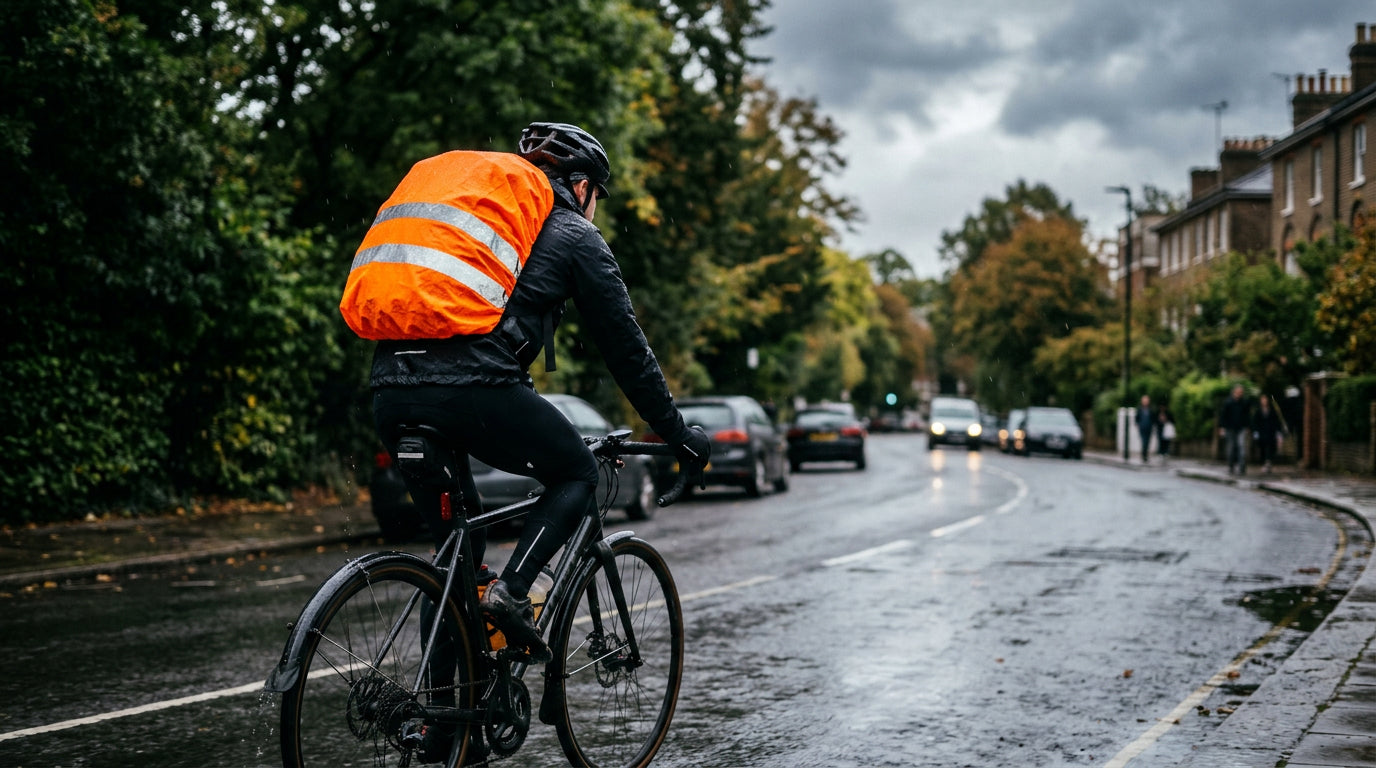
Britain gets around 159 days of measurable rain every year. If you cycle to work or ride at weekends, that's nearly half the year where your laptop, spare clothes, and kit risk getting soaked through. A good waterproof backpack cover keeps everything dry for under £15. Pick a hi-vis one, and it doubles as a safety feature that makes you more visible to drivers.
This guide covers what to look for in a cycling backpack cover, why reflective and hi-vis options are worth choosing, and how to find a rucksack cover that actually stays put in wind and rain.
Most rucksacks aren't waterproof. Even bags sold as “water-resistant” or “shower-proof” will eventually let moisture through during a proper British downpour. Zips and seams are the weak points, and they're the first places water finds its way in. If you're carrying a work laptop, paperwork, or a change of clothes, that's a problem you only need to experience once.
The numbers make the case clearly. Water damage to a laptop typically costs between £200 and £800 to repair. A MacBook without AppleCare? Expect to pay £500 or more. A decent waterproof backpack cover costs under £15. It pays for itself the first time the heavens open on your morning commute.
Some hiking and commuter bags come with built-in rain covers tucked into a zip pocket at the base. These are better than nothing, but they're not great for cycling. They're fiddly to deploy mid-ride, they flap around at speed because they're designed for walking pace, and almost none of them are hi-vis or reflective. A dedicated cycling backpack cover solves all three of those problems.
Not all backpack covers are built for cycling. Here's what separates a good one from a flimsy disappointment:
Waterproofing: look for fully taped seams and a waterproof rating of at least 2000mm PU. “Water-resistant” isn't enough for British weather. You need a rucksack cover that keeps water out during an hour in heavy rain, not just a ten-minute drizzle.
Fit and security: this is where most cheap rucksack covers fail. A cover that balloons in the wind is uncomfortable, noisy, and can actually let water pool on the fabric before seeping through. Look for elasticated edges combined with cross straps or velcro fastening that hold the cover tight against your bag.
Visibility: your backpack sits squarely in the eyeline of the driver behind you. A hi vis backpack cover in bright yellow, orange, or green turns that dead space into a genuine safety feature. Add reflective strips or panels and you've got night-time visibility under headlights too.
Weight and packability: the best backpack cover is the one you actually have with you when rain hits. Under 150g is ideal. If it's too bulky to live permanently in your bag, you won't have it the one morning the forecast gets it wrong.
In 2023, 87 cyclists were killed on Great Britain's roads and nearly 4,000 were seriously injured. The most common factor in fatal and serious collisions was the driver failing to look properly. Anything that makes you more noticeable to drivers reduces that risk.
A reflective backpack cover works in your favour because of where it sits. It's at the centre of your back, roughly at windscreen height for the car behind you. That's prime real estate for visibility, and most cyclists waste it entirely by wearing a plain black rucksack.
There's a useful distinction between hi-vis and reflective, and the best covers use both. Fluorescent colours (yellow, orange, green) stand out during daylight because they contrast sharply against most backgrounds. Reflective material bounces light back towards its source at night, making you visible under headlights from a long distance. If you ride at dawn, dusk, or after dark, you need reflective strips as well as a fluorescent base colour.
There's also what cyclists on forums call the “visibility paradox”: if your rucksack already has reflective features built in, throwing a plain dark rain cover over it hides them completely. A high visibility backpack cover keeps those safety benefits working even when it's chucking it down.
Our waterproof reflective backpack cover uses 3M Scotchlite reflective tape on a hi-vis orange background, covering both daylight and night-time visibility. Pair it with a waterproof cycling helmet cover and you've got reflective visibility from your head to the middle of your back.
This is a fair question, and the honest answer is that both approaches work. The right choice depends on how often you ride and how much you want to spend.
A separate cycling backpack cover:
A fully waterproof bag:
For most cycle commuters, a cover makes more sense. You probably already own a rucksack you like, and spending £12 on a waterproof rucksack cover is far cheaper than replacing the whole bag. The hi-vis and reflective options available in covers are also hard to find in fully waterproof bags, so you'd likely need to buy separate reflective accessories on top.
If you ride every single day in all conditions and want one fewer thing to think about, a dedicated waterproof rucksack has its place. But for the price of one waterproof bag, you could buy a backpack cover, a hi-vis helmet cover, and still have change left over.
The single biggest complaint about rucksack covers on cycling forums is flapping. A cover that catches the wind like a sail is annoying at best. At worst, it's less waterproof because stretched fabric allows water to pool and eventually seep through.
Here's how to get it right:
Match the size to your bag. Most covers state a litre range (for example, 25 to 40 litres). Choose the size that matches your actual bag, not the next one up. A snug fit is always better than a loose one.
Use the cross straps. Covers with velcro cross straps or clip buckles that wrap around the front of the bag are far more stable than those relying on elasticated edges alone. The straps stop the cover lifting off your bag at speed, which is exactly what causes flapping on most cheap covers.
Tuck in excess fabric. If your bag sits at the smaller end of the cover's range, fold the extra material underneath and secure it with the straps. A minute spent adjusting saves a whole ride's worth of flapping.
Check the edges. Elasticated edges should sit snugly around the contour of your bag without gaps. Gaps let wind underneath, which lifts the cover and lets rain run inside. Both defeat the purpose entirely.
The BTR high visibility reflective waterproof backpack cover ticks every box above. It's 100% waterproof with fully sealed seams, finished in hi-vis orange with generous 3M Scotchlite reflective tape that lights up under headlights.
Fit is handled by a combination of elasticated edges and cross velcro straps that hold the cover tight to your bag, even at speed. Reviewers on road.cc noted the secure fastening keeps the cover in place during heavy rain without the flapping that plagues cheaper alternatives. On Amazon, riders consistently praise how bright it is under car headlights, with one describing the reflective tape as lighting up “like a torch”.
At under £15, it costs a fraction of a fully waterproof bag and works with whatever rucksack you already own. Compared to alternatives like the HUMP Deluxe (around £25), the BTR cover offers comparable visibility and waterproofing at a noticeably lower price. It's light enough to live in your bag permanently, so you'll always have it when the weather turns.
In a country that averages 159 rainy days a year, that's not a question of if. It's a question of when.
Browse the full backpack cover collection to find the right size for your bag.
Match the cover to your bag's litre capacity, which is usually printed on a label inside or listed on the brand's website. A 20 to 30 litre cover suits most commuter rucksacks, while 30 to 50 litres handles larger touring or overnight bags. If you're between sizes, go smaller rather than bigger. A snug cover stays put in the wind where a loose one flaps.
For panniers themselves, no. Most quality cycling panniers are fully waterproof out of the box. But if you also carry a rucksack, either for extra capacity or to take into the office, a cover on that bag is still worth it. Plenty of commuters run panniers plus a small backpack and the bag on your back is usually the one with the laptop in it.
Yes. There's nothing cycling-specific about the fabric or fit, so the same cover works fine on a hike or a rainy commute on foot. Cycling covers tend to sit tighter because they're designed to resist wind at speed, which is actually a bonus when walking or running. Hi-vis and reflective versions are just as useful for being seen on country roads at dusk.
Peel the cover back like lifting a hood. The elasticated edge stretches far enough to let you get at the zips without removing the whole thing. If you need full access, it's usually faster to whip the cover off, dig out what you need, then refit it. Keep anything you might want mid-ride, like a lock key or snack, in a jacket pocket instead.
Rinse it under the tap or hose to shift road grime and salt, then hand wash with mild detergent if it's properly muddy. Keep it out of the washing machine and tumble dryer because the heat and agitation break down the waterproof coating. Hang it to air dry, ideally somewhere breezy rather than next to a radiator.
Ready to keep your gear dry and stay visible?
Shop Backpack CoversSave 10% on your first BTR order
BTR product and company updates and special offers. No spam, unsubscribe any time.


