
Ihr Warenkorb ist leer
Get 10% off all orders over £50. Discount applied automatically at checkout.
Get 10% off all orders over £50. Discount applied automatically at checkout.

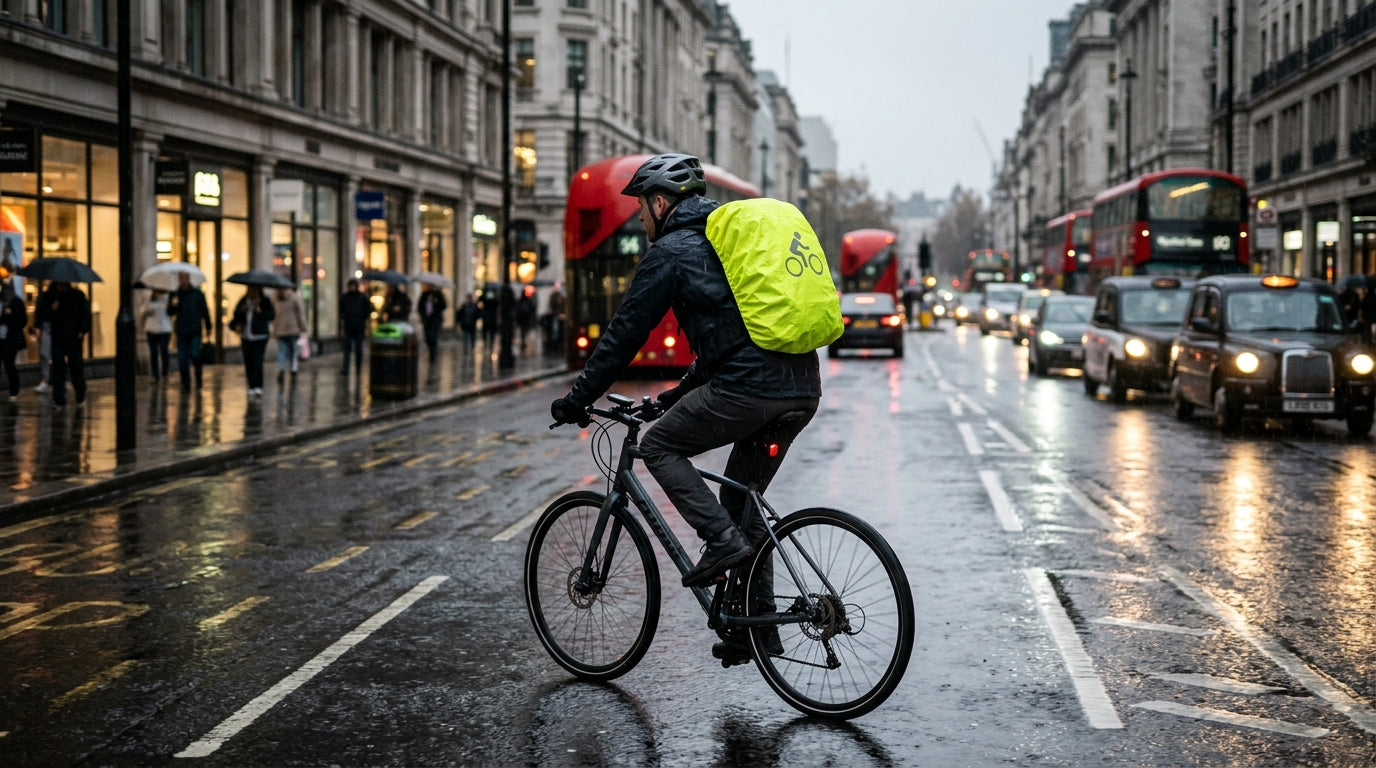
You cycle to work, it starts raining, and your laptop is in your backpack. You've got two options: buy a waterproof backpack cover for the bag you already own, or replace the whole thing with a dedicated waterproof bag. Both keep your gear dry, but they solve the problem in very different ways. Here's how to decide which one actually suits your riding.
A waterproof backpack cover is a lightweight shell that stretches over your existing rucksack. It shields the top and sides from rain, packs down small when you don't need it, and costs a fraction of a new bag. Most good ones, like the BTR waterproof reflective backpack cover, also add hi-vis colour and reflective detailing for road visibility.
A dedicated waterproof bag is built from waterproof fabric throughout, often with a roll-top closure and welded seams. Brands like Ortlieb, Osprey, and Alpkit make popular models. The bag itself is the barrier, so there's nothing extra to put on or take off.
This is the biggest advantage. Most cyclists already own a rucksack that fits well, has the right pockets, and carries their daily kit comfortably. A cover lets you keep using it in the rain without replacing something that isn't broken.
A decent waterproof rucksack cover costs between £5 and £15. A dedicated waterproof cycling backpack from Ortlieb or Osprey runs £80 to £200. That's a significant difference, especially if you only ride in the rain a few times a month.
Hi-vis and reflective backpack covers do double duty. They keep rain off your bag and make you visible to drivers. On dark mornings and grey rainy commutes, a bright yellow reflective backpack cover stands out far more than a black waterproof bag ever will. If you already wear dark clothing on the bike, a cover adds a large reflective surface right where drivers can see it.
For more on why visibility matters, read our post on why every cyclist should have a hi-vis backpack cover.
A cover weighs next to nothing. The BTR backpack cover folds down to pocket size, so you can carry it every day without noticing. A waterproof bag is your bag, full stop. You're committed to it whether the forecast says rain or sunshine.
The biggest complaint about covers is the faff. When rain hits, you need to stop, take the cover out, stretch it over your rucksack, and tuck it in. With a waterproof bag, you just ride. Everything inside is sealed from the moment you zip or roll the top shut.
Covers protect the top and sides of your bag, but the back panel (pressed against your body) isn't covered. In prolonged heavy rain, some moisture can work its way through the contact points. A fully waterproof bag seals from every angle. If you're riding long distances in sustained downpours, this matters.
Need to grab your phone, keys, or a snack mid-ride? With a cover on, you have to peel it back first. A waterproof bag lets you access pockets and compartments normally.
Plenty of experienced commuters use both. A waterproof cover for everyday rides and a dedicated dry bag or roll-top for the days when the Met Office issues warnings. Some cyclists also line the inside of their rucksack with a simple dry bag for the laptop, then use a cover on the outside for visibility. Belt and braces, and it works.
If you're looking for practical tips on keeping your kit dry on the commute, our guide on how to keep your backpack dry while cycling to work covers the full range of options.
| Backpack cover | Waterproof bag | |
|---|---|---|
| Cost | £5 to £15 | £40 to £200+ |
| Weight | Under 100g | 700g to 1.2kg (bag itself) |
| Visibility | Hi-vis and reflective options widely available | Mostly black or muted colours |
| Waterproofing | Top and sides. Back panel exposed | Fully sealed all round |
| Convenience | Needs fitting when rain starts | Always ready |
| Bag choice | Use any rucksack you own | Limited to the waterproof bag's design |
For most UK cyclists who commute under 45 minutes, a waterproof backpack cover is the smarter buy. It's cheaper, lighter, adds visibility, and lets you keep the rucksack you already own. You don't need to spend £150 on a new bag when a £10 cover does the job on a typical British rainy morning.
Save the dedicated waterproof bag for touring, bikepacking, or those rare days when the heavens truly open and you're riding for hours. For everything else, a good rucksack cover is all you need.
Read our full buying guide to the best waterproof backpack covers if you're ready to pick one.
Match the cover's litre rating to the total capacity of your rucksack, not just how full it usually is. The BTR cover fits bags from 20 to 55 litres thanks to an elasticated hem that pulls tight around most shapes. If your bag sits between two size brackets, go for the smaller one since a loose cover flaps in the wind and leaks at the edges. Measure your bag fully loaded rather than empty, because a packed rucksack sits noticeably bigger than a flat one.
A well fitted cover grips around the elasticated hem under the bag and stays put at normal commuting speeds. Covers slip off most often when they're oversized for the rucksack or when the elastic has stretched out after years of use. If you're riding fast or into strong gusts, tucking the bottom of the cover up under the shoulder straps gives it extra hold. Worth testing the fit on a short ride before you rely on it for your laptop.
On a typical 30 minute ride, not noticeably. The back panel presses against your jacket and shirt so it's sheltered from direct rain, and sweat has more to do with how wet that area gets than anything coming in from outside. A laptop inside a padded sleeve stays dry. The back panel only becomes a real issue on long rides in sustained downpours where water runs down your back under the bag, which is when a dedicated waterproof rucksack earns its price.
A standard backpack cover is shaped for a rucksack, so it fits loosely on a pannier or messenger bag rather than snugly. For panniers, a dedicated pannier rain cover or a fully waterproof pannier is the right tool since the flat back face and hook system are different from a rucksack. Messenger bags with the classic diagonal strap can work with an oversized backpack cover at a pinch, but check the hem reaches below the flap before you trust it with anything valuable.
Keep your kit dry on every ride
Shop Backpack CoversSave 10% on your first BTR order
BTR product and company updates and special offers. No spam, unsubscribe any time.


