
Ihr Warenkorb ist leer
Get 10% off all orders over £50. Discount applied automatically at checkout.
Get 10% off all orders over £50. Discount applied automatically at checkout.
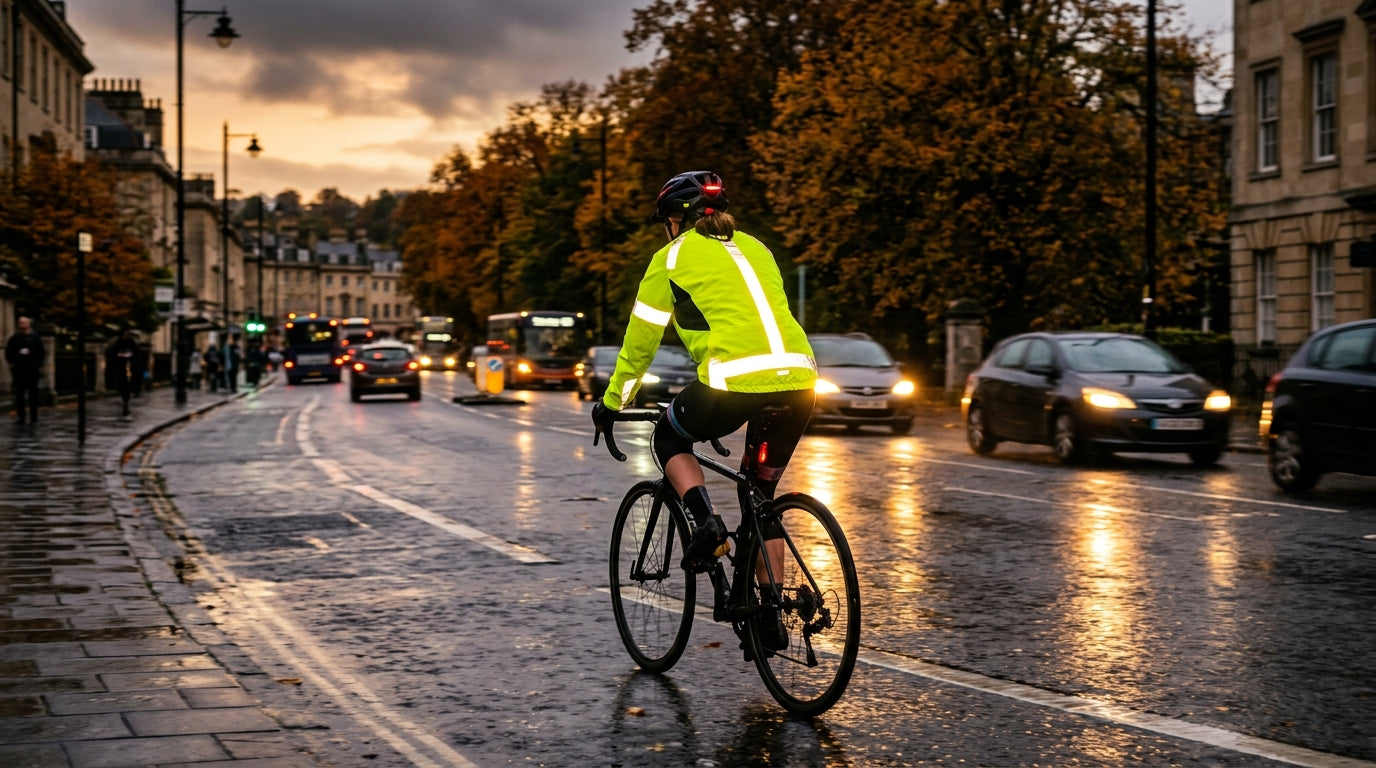
Cycling in the UK means riding in the dark for roughly half the year. Between October and March, most commuters leave home before sunrise and pedal back after sunset. A reflective cycling jacket isn't optional gear in those conditions. It's the single most effective way to make sure drivers actually see you.
But the market is crowded, prices range from £20 to £300, and every brand claims to be the brightest. This guide cuts through the noise. We'll cover what actually matters in a reflective cycling jacket, compare the main options available in the UK, and help you choose the right one for your riding.
Research by Wood et al. found that cyclists wearing reflective clothing are recognised by drivers 90% of the time. Cyclists in dark clothing? Just 2%. That's not a marginal improvement. It's the difference between being seen and being invisible.
Department for Transport data shows that 82 cyclists were killed on British roads in 2024, with 3,822 seriously injured. Over half of fatalities occurred on rural roads with limited street lighting. Peak injury times line up almost exactly with commuting hours: 7 to 10am and 4 to 7pm.
A good reflective cycling jacket won't make you invincible, but it dramatically shifts the odds in your favour. For a deeper look at the numbers behind cycling visibility, see our article on cycling safety statistics in the UK.
Not all reflective jackets are created equal. Here's what separates a good cycling jacket from one that'll end up stuffed in the back of a drawer after two rides.
This is the biggest decision, and most buyers get it wrong. There are three types of visibility technology:
If you're only riding in one condition, a single-technology jacket works fine. But most UK cyclists ride in both daylight and darkness across the seasons. A combination jacket covers both without needing two separate layers. We've written a full breakdown of hi-vis vs reflective cycling gear if you want the details.
The UK averages around 150 rain days per year, so waterproofing matters. Look for a hydrostatic head rating of at least 5,000mm for light showers, or 10,000mm and above if you're riding through proper downpours. Taped seams are essential for any jacket claiming to be waterproof, as untaped seams will leak at every stitch line.
There's always a trade-off between waterproofing and breathability. Premium jackets with Gore-Tex or eVent membranes handle both, but they cost £150 or more. Budget jackets use PU coatings that keep rain out effectively but can feel clammy during hard efforts. For commutes under 45 minutes, a PU-coated jacket does the job perfectly well.
The number one complaint in cycling forums about reflective jackets is overheating. Fully reflective jackets from brands like Proviz are incredibly visible, but cyclists regularly describe them as "boil in the bag" in online reviews.
Mesh lining helps enormously. It creates an air gap between the outer shell and your skin, letting moisture wick away rather than pooling against your body. Pit zips (underarm vents) are another useful feature, letting you dump heat on climbs without unzipping the front.
A cycling jacket should have a slightly longer rear panel (a "drop tail") to protect your lower back from wheel spray. Three or four pockets give you somewhere to stash your phone, keys, and a snack. Elasticated cuffs keep the wind and rain out at your wrists.
Fit matters more than you'd think. A jacket that's too loose will flap in the wind and create drag. Too tight, and you can't layer a jersey underneath. Look for a relaxed cycling fit that allows a base layer and jersey beneath.
Here's how the main options stack up. We've focused on jackets you can actually buy in the UK right now, from budget to premium.
The BTR reflective cycling jacket uses a 50/50 design: hi-vis fluorescent yellow panels for daytime visibility and reflective silver panels that light up under headlights at night. It's waterproof with a mesh lining for breathability, has four pockets, and fits unisex from S to XL.
At under £20, it's comfortably the most affordable reflective cycling jacket on the market. The nearest competitor at this price point is a basic Decathlon shell that offers hi-vis colour but no reflective panels. The BTR gives you both.
Best for: commuters, new cyclists, anyone who wants solid visibility without spending £100+
Decathlon's entry-level cycling jacket comes in neon yellow with a few reflective strips. It's showerproof rather than fully waterproof, and the fit is more casual than cycling-specific. Good as a basic layer, but the reflective coverage is minimal compared to dedicated reflective jackets.
Best for: occasional leisure riders on a tight budget
Madison's FiftyFifty jacket uses a similar concept to the BTR: half hi-vis, half reflective. It's a step up in materials and finish, with a more tailored cycling fit and a longer drop tail. At three times the price of the BTR, it's aimed at riders who want a more premium feel.
Best for: regular commuters willing to spend more for a refined fit
Altura's best-selling hi vis cycling jacket combines fluorescent yellow fabric with large reflective panels. The waterproof rating is higher than the budget options, and it includes a fleece-lined collar for cold mornings. It's a well-made jacket with a proven track record, but you're paying five times more than the BTR for similar visibility.
Best for: year-round commuters who ride in heavy rain and want premium waterproofing
The Proviz is the most recognisable reflective cycling jacket on the market. The entire outer surface is retro-reflective material, making it extraordinarily visible at night. It lights up like a beacon under headlights.
The trade-off is breathability. Fully reflective fabric doesn't vent well, and riders regularly report getting very hot even on moderate efforts. It's also grey and unremarkable in daylight, with no hi-vis element. And at five to seven times the price of the BTR, it's a significant investment.
Best for: night-only riders who prioritise maximum headlight reflectivity above all else
Endura's Luminite jacket takes a subtler approach with silver reflective blocks on a dark background. It's EN1150 certified for high visibility cycling use, waterproof, and has a more urban styling that works off the bike too. Quality is excellent, as you'd expect from Endura.
Best for: style-conscious commuters who want reflectivity without the full hi-vis look
Many cyclists search specifically for a reflective cycling jacket mens or reflective cycling jacket womens fit. Some brands offer gender-specific cuts, while others (including BTR) use a unisex design.
The key difference in women's-specific jackets is usually a shorter torso, narrower shoulders, and more room through the hips. If you're between sizes in a unisex jacket, sizing down usually gives a closer fit for women, while sizing up works for layering.
Altura and Endura both offer women's-specific reflective jackets. BTR's unisex sizing runs from S to XL, and the relaxed fit works well across body types. If you also run, the BTR jacket doubles as a reflective running jacket too.
Here's the honest answer: you don't need to spend £100 to be visible on your bike. A £20 jacket with hi-vis panels and reflective material will show up in headlights just as brightly as a £150 one.
What more money buys you is better waterproofing, improved breathability, more refined fit, and premium materials that last longer. If you're cycling 200 miles a week in all weathers, that investment makes sense. If you're commuting three miles to the office or riding at weekends, a budget high vis cycling jacket does everything you need.
The BTR high visibility range is designed specifically for this kind of practical, everyday cycling. Visible, waterproof, and affordable enough that there's no excuse not to have one.
Reflective material degrades over time, especially with rough washing. Follow these tips to keep your jacket performing:
A reflective cycling jacket is one of the simplest ways to stay safer on UK roads. With 4.7% of London commuters now cycling (and growing), more riders than ever are sharing the road with cars, vans, and lorries. Being visible isn't vanity. It's common sense.
For most riders, the best reflective cycling jacket is one that combines hi-vis and reflective technology, keeps the rain off, and doesn't cost a fortune. You'll find all of that in the BTR range.
If you're also looking to add a lighter layer for warmer months, check out our guide to the best reflective gilets and vests. And for the full picture on staying dry while cycling, our commuter's survival guide covers everything from mudguards to bag covers.
Yes. Lights are a legal requirement after dark in the UK and a reflective jacket isn't a substitute for them. Reflective material only lights up when a car's headlights hit it, so without your own lights you're invisible to anything approaching that hasn't pointed its beams at you yet. Run a front white and rear red light at minimum, with the jacket on top.
It can do, especially with a tall structured commuter pack that hides the upper back. The fix is a reflective backpack cover or a reflective ankle band, since reflectives at ankle height move with each pedal stroke and catch the eye even when your torso is hidden. BTR's hi vis range includes both for exactly this reason.
With 30°C washes and no tumble drying, the silver panels on a decent jacket should stay bright for three to five years of regular use. Heat is the killer here: tumble drying or ironing degrades the reflective film fast. If the panels start looking matt or flaky in torchlight, it's time for a new one.
Most reflective cycling jackets including the BTR are shells: waterproof and windproof but not insulated. For UK winter rides you'll want a long sleeve base layer and a jersey or thermal mid layer underneath. The jacket then traps the warmth without you overheating on the climbs.
A bit, yes. Reflective fabric works best when there's a clear light source pointing at it like car headlights or streetlights, and at dusk the ambient light flattens that contrast. That's why combination jackets with hi vis panels matter: the fluorescent yellow stands out in low contrast light where pure reflective would struggle.


